
GODIP
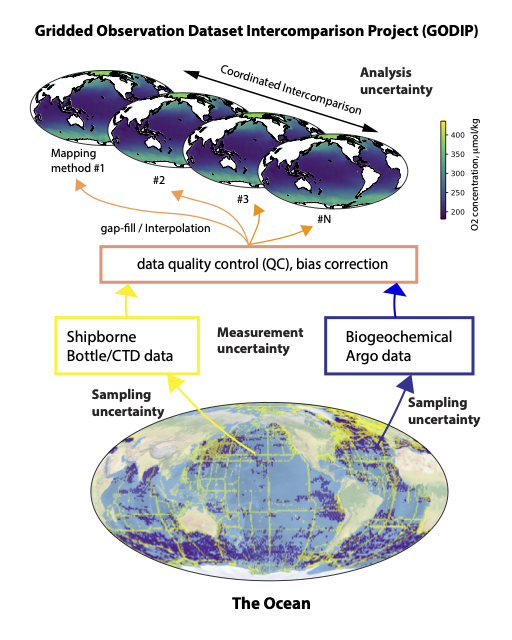
The GODIP Group seeks to investigate underlying causes of disagreement among observation-based mapped data products of ocean biogeochemical properties. We do this by conducting coordinated intercomparisons of data products, changing only certain parameters of the intercomparison (e.g., underlying dataset, mapping method, data adjustment approach). The group has made significant progress evaluating dissolved oxygen data products, and will soon venture into other properties.
GODIP-DO
The Gridded Observational Dataset Intercomparison Project for Dissolved Oxygen (GODIP-DO) aims to diagnose the causes of differences among observation-based mapped data products of ocean oxygen content. We specifically focus on estimates of long-term climatological averages, seasonal and interannual variability, and deoxygenation trends, all on both global and regional scales.
GODIP-DO has hosted sessions at international meetings, co-sponsored international workshops, contributed publications, and led community efforts to investigate causes of disagreements among mapped oxygen data products.
Resources
Publications
Ito, T., et al. (2025). Assessing the observational uncertainties of dissolved oxygen climatology and seasonal cycle through a coordinated intercomparison project. Global Biogeochemical Cycles, 39(11), e2025GB008751.
Data
GODIP Group. (2025). GODIP-DO Climatology and Seasonal Cycle. Zenodo. https://doi.org/10.5281/zenodo.15794914
4D-BGC SCOR Working Group
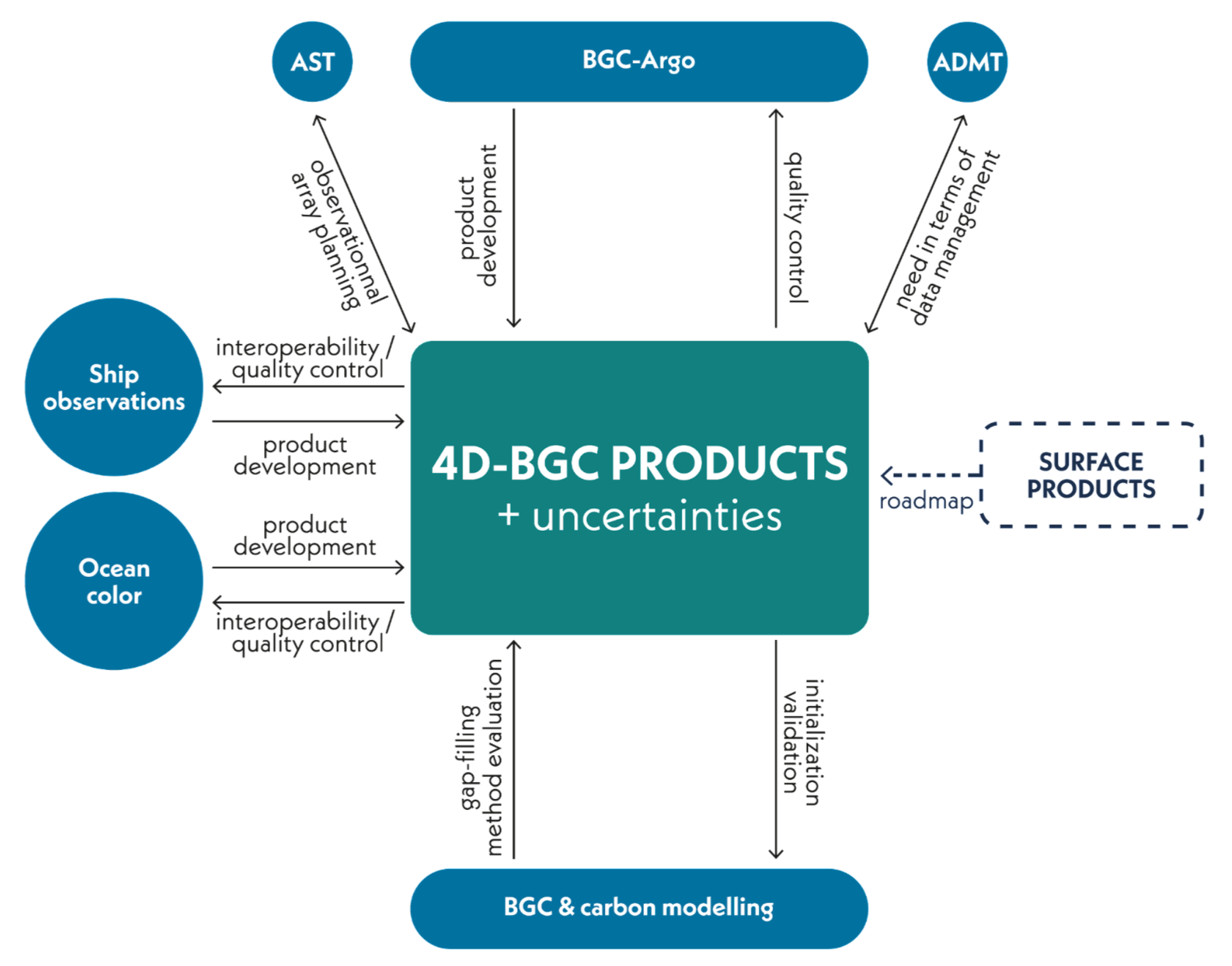
The GODIP group collaborates closely with SCOR Working Group #168 (4D-BGC) on the development, coordination, and validation of gridded data products of ocean biogeochemistry.